

(+66) 0808-101-983
Call to rent a car
Call to rent a car
German cars have a strong reputation for engineering, performance, comfort and sophisticated design. In Thailand, brands such as Porsche, Audi, Mercedes-Benz and BMW appeal to drivers looking for everything from practical executive sedans to high-performance sports cars and premium SUVs.
However, buying a luxury car involves more than choosing a brand and model. Maintenance, insurance, depreciation, spare parts and resale value can all influence the total cost of ownership.
Whether you are considering your first European car, upgrading to a luxury model or researching the used-car market, this guide explains what to consider before making a decision.

Each German manufacturer has its own character. The right choice depends on your budget, driving preferences, lifestyle and expectations for long-term ownership.
Mercedes-Benz is well known for combining refined interiors, comfort and advanced technology. Its range includes compact models, executive sedans, luxury SUVs and high-performance AMG vehicles.
Popular model families include the C-Class, E-Class, S-Class, GLC, GLE and Mercedes-AMG range.
Mercedes-Benz can be a good option for drivers who prioritize comfortable journeys, business use and an elegant driving experience. Before purchasing a used model, check its maintenance history, electronic systems, suspension and warranty coverage.

BMW is associated with sporty handling, responsive performance and driver-focused interiors. The 3 Series and 5 Series are popular choices in the executive sedan segment, while the X1, X3, X5 and other X models offer SUV options.
BMW also offers plug-in hybrid and fully electric vehicles, giving buyers different choices depending on their driving habits and charging access.
For a used BMW, pay attention to the condition of the engine, transmission, cooling system, suspension and electronic features. For hybrid and electric models, battery condition and warranty coverage are also important.

Audi combines understated styling with modern technology and a range of sedan, SUV and performance models. Depending on availability and model year, buyers may consider the A4, A6, Q3, Q5, Q7 and performance-oriented RS models.
Audi can appeal to drivers seeking a contemporary design and a balance between everyday usability and performance.
When evaluating a used Audi, check the service records, transmission operation, electronics and the condition of any model-specific systems. The equipment and maintenance requirements can vary significantly between models.

Porsche occupies a distinctive position among German automotive brands, with a strong focus on sports-car engineering and performance. The 911, 718, Macan, Cayenne and Taycan serve different needs, from weekend driving to luxury SUV use and electric mobility.
Porsche ownership can be particularly rewarding for enthusiasts, but budgeting carefully is essential. Tyres, brakes, specialist servicing and certain replacement parts can be expensive, particularly on performance models.
Before buying a used Porsche, arrange a thorough inspection by a qualified specialist and verify its service history, accident records and warranty status.

Which brand is best? There is no universal winner. Mercedes-Benz may suit comfort-focused drivers, BMW may appeal to those who enjoy sporty handling, Audi offers a modern and understated approach, while Porsche is particularly attractive to performance enthusiasts. Comparing specific models is more useful than ranking entire brands.
One of the first decisions is whether to purchase a new vehicle or choose a used one.
A new car offers the opportunity to select your preferred model and specification while benefiting from the applicable new-car warranty and service arrangements.
Before purchasing, compare the complete package rather than just the advertised price. Consider warranty duration, scheduled maintenance, insurance, financing terms and any included service packages.
Ask the authorized dealer to confirm exactly what is covered, including exclusions, mileage limits and the conditions required to maintain the warranty.
he used-car market may offer access to higher-specification models at a lower purchase price than buying new. However, the condition and history of the individual vehicle are crucial.
Before committing, check:
Certified pre-owned programs can offer additional reassurance. For example, BMW Premium Selection in Thailand advertises vehicle inspections, verified service history and a minimum 24-month warranty for eligible vehicles, subject to program terms.
Official program details: https://usedcar.bmw.co.th/benefits
A professional pre-purchase inspection is worthwhile, particularly when buying an older luxury vehicle or one with complex electronics.
Maintenance is one of the most important factors to consider when calculating the cost of ownership.
German vehicles use sophisticated mechanical and electronic systems. The cost of maintaining a particular car depends on its age, model, mileage, condition, parts availability and service requirements.
Regular maintenance commonly includes engine oil and filter changes, fluid checks, brake inspections, tyre assessments, battery checks and scheduled replacement of specified components.
Following the manufacturer’s maintenance schedule can help identify problems early and support the long-term condition of the vehicle.
Mercedes-Benz, for example, provides scheduled Service A and Service B maintenance. BMW also offers service packages covering specified maintenance items. Coverage and prices depend on the vehicle and package.
Official references:
Genuine parts and authorized service centres can be appropriate choices, particularly for newer vehicles under warranty. Independent specialists may also provide maintenance options for older cars.
Compare the quality of the workshop, technician experience, parts used and warranty on the repair—not only the quoted price.
For older German cars, check the availability and cost of replacement components before purchasing. A vehicle that appears inexpensive initially may require substantial repairs if its maintenance has been neglected.
Plug-in hybrids and fully electric models have additional considerations. Buyers should verify high-voltage battery condition, battery warranty, charging equipment and the cost of any model-specific repairs.
Electric vehicles generally have fewer routine engine-related service items than comparable combustion-engine vehicles, but tyres, brakes, suspension, electronics and battery-related systems still require attention.
Rather than relying on a generic estimate for an entire brand, request a service estimate for the exact model and year you are considering.
Ask a workshop to identify the upcoming scheduled services, likely wear items and any repairs that may be needed based on the vehicle’s condition. Keep an additional reserve for unexpected work.
Insurance is another essential part of ownership. The right policy depends on the vehicle’s value, age, usage, driver profile and the level of protection required.
Thailand has compulsory motor insurance requirements. Compulsory coverage is different from voluntary insurance that protects against a wider range of vehicle-related risks.
For a valuable German car, many owners investigate comprehensive voluntary insurance, commonly referred to as Class 1 insurance. Actual protection depends on the policy wording and the insurer.
Before choosing a policy, review:
Insurance premiums can vary considerably. A high-performance Porsche, an executive BMW and a family-oriented Mercedes-Benz SUV may have very different premiums.
Insurers may consider the vehicle’s insured value, repair costs, parts availability, accident risk, driver details and claims history.
Request quotations for the exact vehicle and compare the benefits as well as the premium. A cheaper policy may have lower limits, higher deductibles or less suitable repair arrangements.
For eligible new Mercedes-Benz vehicles, the official StarProtection insurance program provides information about available coverage and authorized repair options:
https://www.mercedes-benz.co.th
Always read the current policy and confirm the details directly with the insurer before purchasing.
The cost of owning a German car is not limited to maintenance and fuel. Depreciation—the difference between the purchase price and eventual resale price—can be a major expense.
However, depreciation varies by model, age, specification, condition and market demand.
Factors that may influence resale value include:
Before buying, research asking prices for comparable vehicles and remember that advertised prices are not necessarily completed sale prices.
If you expect to sell within a few years, compare the likely depreciation of your shortlisted models instead of assuming that one German brand always retains its value better than another.
Thailand’s climate, traffic and road conditions can influence how you use and maintain a car.
Heavy traffic and frequent stop-and-go driving may affect fuel consumption and vehicle wear. If you commute daily, consider visibility, parking dimensions, comfort and how easy the car is to use in crowded areas.
A large luxury SUV may be ideal for some owners but less convenient for someone who frequently parks in tight city spaces.

High temperatures make a well-maintained cooling and air-conditioning system particularly important. Check coolant condition, cooling-system performance, air-conditioning operation and battery health as appropriate for the vehicle.
During Thailand’s rainy season, inspect tyres, wipers, lights and brakes regularly. Avoid driving through floodwater when its depth or road condition is uncertain, as water can damage mechanical and electrical components.
Before buying a less common model, confirm that qualified workshops and replacement parts are available in your area. This is particularly relevant for rare performance models and vehicles with specialized equipment.
For drivers who regularly travel outside Bangkok, consider access to servicing and roadside assistance along your usual routes.
A well-planned purchase can help reduce unexpected costs, while careful preparation can make selling a vehicle easier.
Start by defining your budget and intended use. Decide whether you need a daily commuter, family SUV, executive sedan or weekend sports car.
Then shortlist a few models and compare their purchase prices, servicing requirements, insurance quotations and expected resale values.
Before finalizing a purchase, verify the documents and arrange an independent inspection. Do not rely solely on a seller’s description or a short test drive.
Prepare the vehicle’s service records, registration documents, spare keys and warranty information, if applicable. Address obvious maintenance issues and present the car in clean, well-maintained condition.
Be transparent about the vehicle’s history. Buyers are more likely to trust a seller who can provide clear documentation and answer questions about repairs and ownership.
Compare similar vehicles to establish a realistic asking price, and make sure the transfer process is handled correctly.
Buying is not the only way to enjoy a luxury car in Thailand.
Ownership may suit drivers who need a vehicle regularly and are comfortable managing its ongoing costs. Renting may be more practical for visitors, occasional drivers or people who want to try a particular model without committing to long-term ownership.
Buying may be suitable if you drive frequently, want a consistent vehicle and plan to keep it for a meaningful period. You can personalize the car and choose how to maintain it, while accepting responsibility for insurance, repairs, depreciation and resale.
Renting can be useful for holidays, business trips, weekend drives, special occasions or testing a vehicle before deciding whether to buy one.
It also allows you to select a different vehicle for different occasions without managing the long-term ownership costs of several cars.
When comparing rental options, review the rental price, mileage allowance, deposit, insurance terms, permitted travel areas and any additional charges.
At, we help customers explore luxury driving options in Thailand, with vehicles suited to different occasions and preferences.
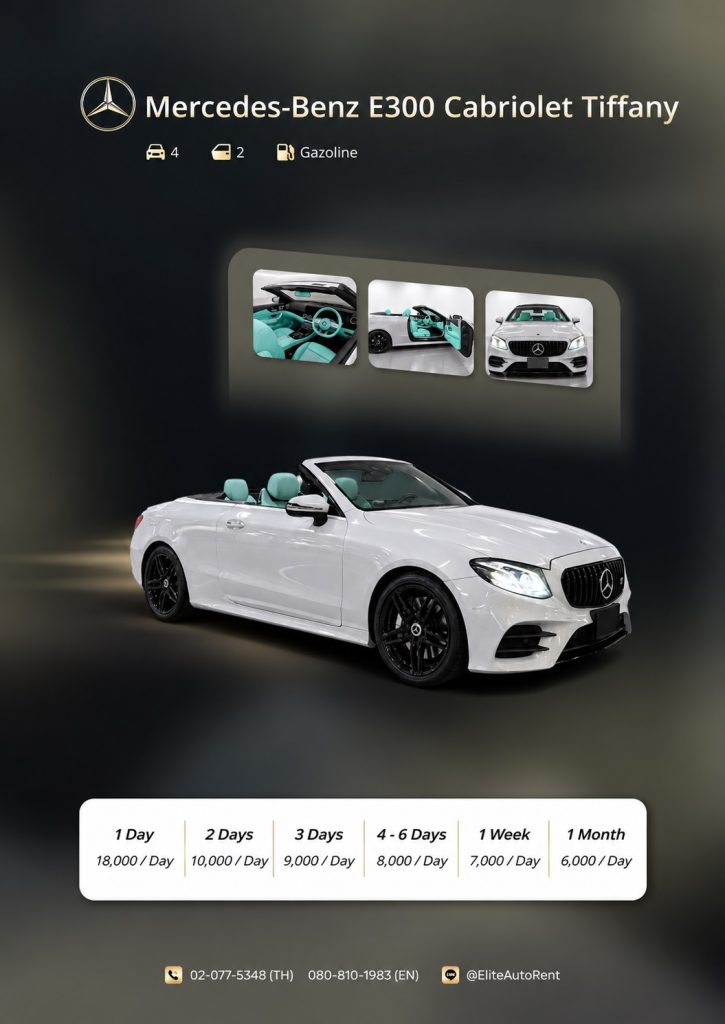
Whether you are interested in a luxury sedan, a premium SUV or a convertible for a Bangkok drive, choosing a rental can offer a flexible way to enjoy a premium vehicle without purchasing one.
Visit: https://eliteautorent.com/en/cars/ to explore available vehicles and rental service
Each vehicle is carefully maintained to provide outstanding comfort, safety, and reliability throughout your journey


Enjoy seamless travel with premium vehicles and professional chauffeur services across Bangkok.
From airport transfers and executive transportation to weddings and special events, our experienced chauffeurs and carefully selected fleet help make every journey comfortable, convenient and reliable.
From business travelers and VIP guests to families and visitors, we aim to deliver a smooth, professional chauffeur experience tailored to every journey.
Our commitment to attentive service, comfortable vehicles and reliable transportation makes Elite Auto Rent a trusted choice for luxury travel in Bangkok.
German cars offer a wide range of driving experiences, from refined executive transport to practical luxury SUVs and high-performance sports cars. The best choice depends on your lifestyle, budget and long-term plans.
Before buying, look beyond the purchase price. Consider maintenance, insurance, depreciation, parts availability and resale value to understand the real cost of ownership in Thailand.
And if you want to enjoy a German luxury car for a trip, weekend or special occasion without committing to ownership, renting is another option worth considering.
If you’re looking to buy a luxury car in Bangkok or elsewhere in Thailand, you can explore authorized dealerships, reputable premium used-car dealers, and online marketplaces such as Facebook Marketplace, TaladROD, Kaidee, and One2car. These platforms offer a range of new and used vehicles, from Mercedes-Benz and BMW to Audi and Porsche. Compare prices, check vehicle history and service records, verify ownership documents, and arrange an independent inspection before making your purchase.
It depends on your priorities. Mercedes-Benz is known for comfort and refinement, BMW for sporty driving characteristics, Audi for contemporary design and technology, and Porsche for performance-focused engineering. Compare individual models and ownership costs before deciding.
Maintenance costs vary by model, age, condition and service provider. Luxury and performance models can have expensive replacement parts and repairs. Reviewing service schedules and obtaining estimates for the specific vehicle is the best way to budget.
A new car offers a fresh ownership history and applicable new-car warranty. A used car may provide a lower purchase price, but it requires careful checks of condition, service records, accident history and warranty coverage.
Verify the documents, service history, accident history and ownership details. Arrange a mechanical inspection and diagnostic scan, and check the engine, transmission, cooling system, suspension, electronics and any hybrid or electric battery systems relevant to the model.
The appropriate level of insurance depends on the vehicle and your financial circumstances. Comprehensive voluntary insurance is worth considering for a valuable car, but compare insured value, exclusions, deductibles, liability limits and repair conditions before selecting a policy.
Resale value depends on the specific model, condition, mileage, service records, market demand and broader market conditions. Compare similar vehicles and research realistic selling prices rather than assuming all models from a brand depreciate at the same rate.
Renting may suit people who need a premium vehicle occasionally or want to try a particular model without taking on long-term ownership costs. Buying may be more appropriate for regular use over several years. Compare the total costs and your actual driving needs.
Welcome to our hub of luxury car rentals in Bangkok, where opulence meets exploration